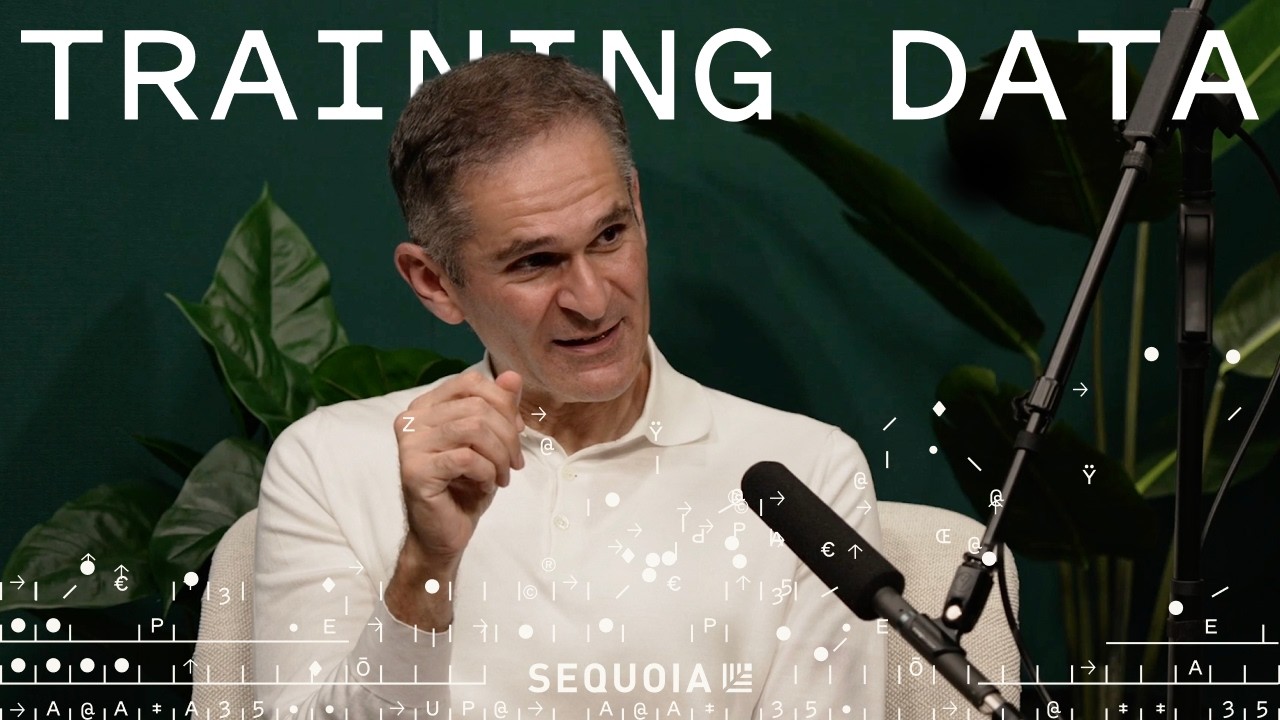
The evolution and promise of RAG architecture with Tengyu Ma from Voyage AI
About this episode
From the show’s notesAfter Tengyu Ma spent years at Stanford researching AI optimization, embedding models, and transformers, he took a break from academia to start Voyage AI which allows enterprise customers to have the most accurate retrieval possible through the most useful foundational data. Tengyu joins Sarah on this week’s episode of No priors to discuss why RAG systems are winning as the dominant architecture in enterprise and the evolution of foundational data that has allowed RAG to flourish. And while fine-tuning is still in the conversation, Tengyu argues that RAG will continue to evolve as the cheapest, quickest, and most accurate system for data retrieval.
They also discuss methods for growing context windows and managing latency budgets, how Tengyu’s research has informed his work at Voyage, and the role academia should play as AI grows as an industry.
Read the show’s notes in full
Show Links:
Voyage AI
Stanford Assistant Professor of Computer Science
Tengyu Ma Key Research Papers:
Sophia: A Scalable Stochastic Second-order Optimizer for Language Model Pre-training
Non-convex optimization for machine learning: design, analysis, and understanding
Provable Guarantees for Self-Supervised Deep Learning with Spectral Contrastive Loss
Larger language models do in-context learning differently, 2023
Why Do Pretrained Language Models Help in Downstream Tasks? An Analysis of Head and Prompt Tuning
On the Optimization Landscape of Tensor Decompositions
Sign up for new podcasts every week. Email feedback to show@no-priors.com Follow us on Twitter: @NoPriorsPod | @Saranormous | @EladGil | @tengyuma
Show Notes: