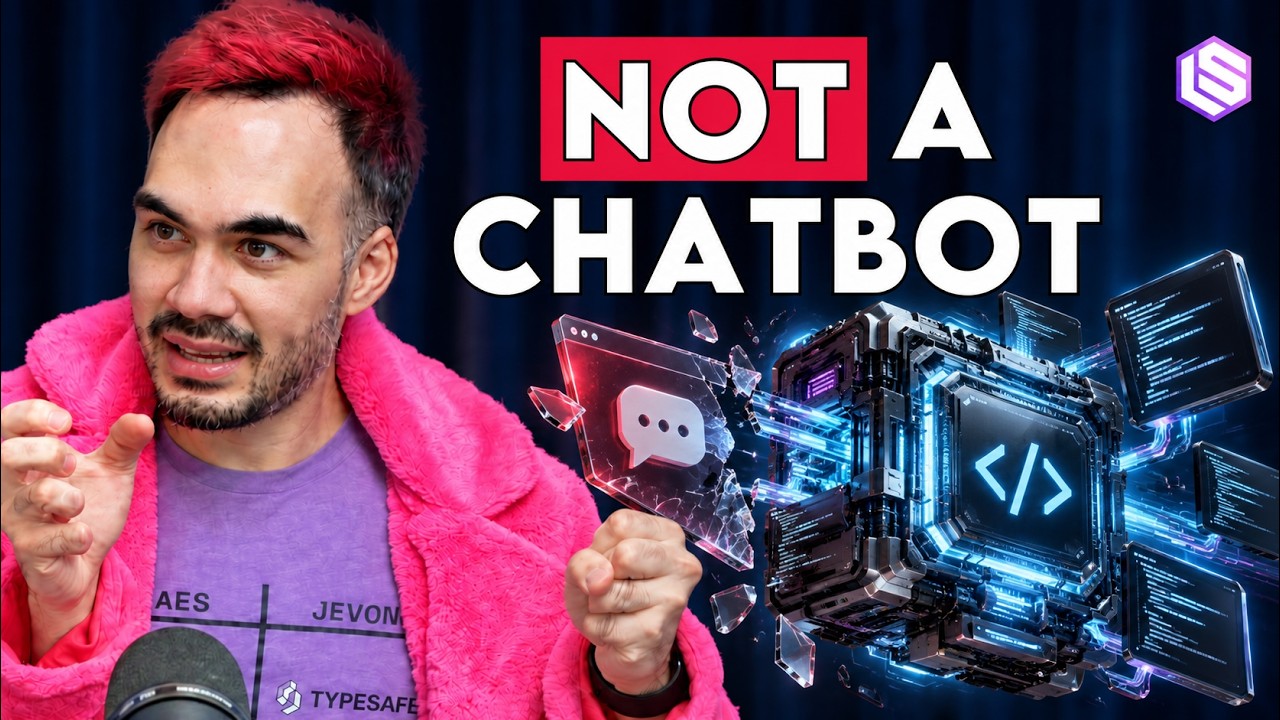
Why I couldn't build Jev at OpenAI — Diogo Almeida, TypeSafe Co-founder & CEO

About this episode
From the show’s notesFrom helping build instruction-following models at OpenAI to spending years trying to answer why AI can solve extraordinarily hard problems yet still automate so little real work, Diogo Almeida is betting that the next wave of AI won’t look like chat. In this episode, the TypeSafe founder and CEO joins swyx days after Jev’s breakout launch to explain System One Models: machine-native AI designed for code, calibrated decisions, reliability, and intelligence per dollar.
We go deep on Jev and RLCD, the failure modes of RLHF, why TypeSafe refuses to optimize around public benchmarks, and why Diogo believes data and the right task matter more than simply scaling compute. Diogo also explains why he left OpenAI, why refusals and safety alignment become fundamentally different problems when AI is infrastructure, how Jev changes the architecture of coding agents, why AI should eventually disappear into the background of software, and why even with a billion dollars, he wouldn’t pre-train a model from scratch.
Read the show’s notes in full
We discuss: • Why AI can solve extraordinarily hard problems but still fail to automate basic work • What System One Models are and why Jev is built for software rather than chat • RLHF, mode collapse, calibration, and the hidden costs of optimizing for human preferences • Why refusals become a problem when AI is buried inside software dependencies • Why TypeSafe rejects public benchmarks and optimizes for intelligence per dollar • The “bitterest lesson”: why the right task and the right data can matter more than compute • Why TypeSafe thinks of itself as a data lab rather than a model lab • RLCD vs. RLHF and RLVR as fundamentally different North Stars for AI • Why reliability and robustness matter more than simple determinism • Jev’s programming primitives and how intelligence maps into software control flow • Why developers should decompose AI workflows into many small, measurable decisions • How structured state replaces giant prompts and system messages • Why Diogo thinks AI should eventually disappear into the background of software • The “inverse SaaS-pocalypse” and how AI could supercharge existing software • System One vs. System Two intelligence and the limits of reasoning models • Dark data, computer use, real-time intelligence, and Jev’s biggest early use cases • Why Jev could reshape coding agents built around a single-model architecture • Why Diogo says he wouldn’t pre-train even if you gave him a billion dollars • The OpenAI journey that led to TypeSafe and why he thinks most neo-labs are approaching AI incorrectly • Coding agents beyond the KV cache, shared state, sub-agents, and the future of multi-agent software
—
Diogo Almeida • LinkedIn: • X: