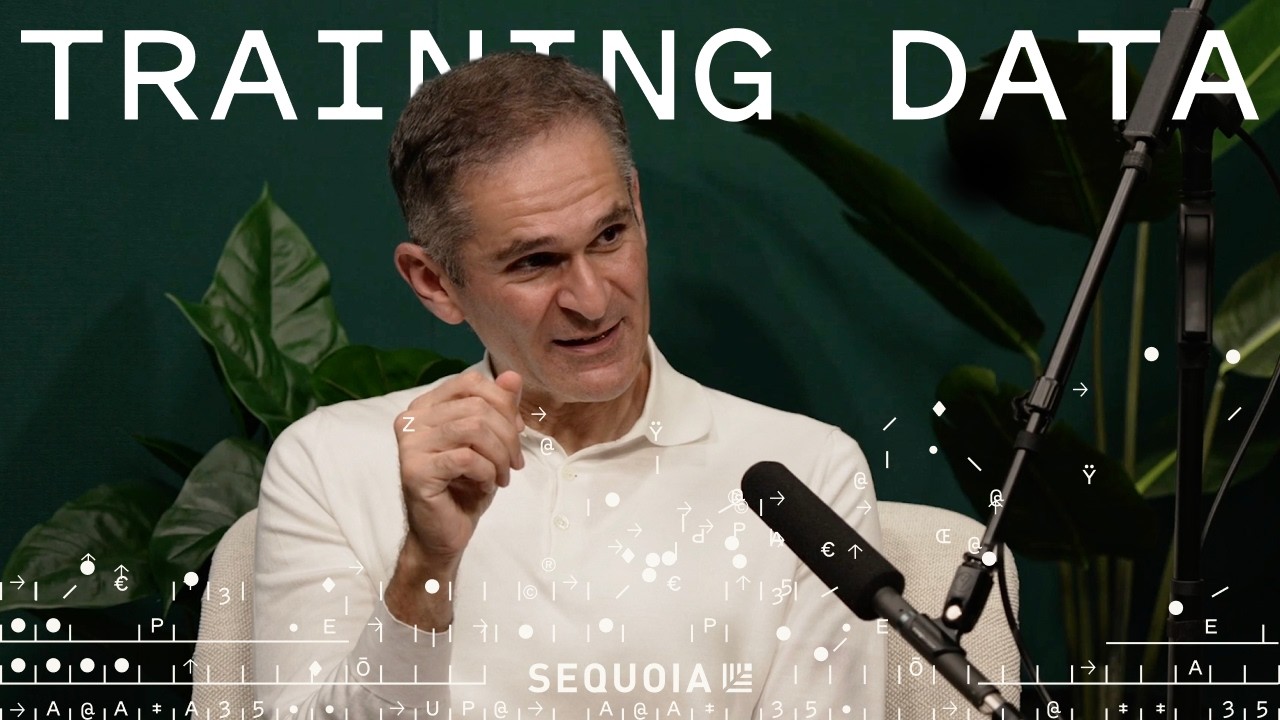
The "Normsky" architecture for AI coding agents — with Beyang Liu + Steve Yegge of SourceGraph
About this episode
From the show’s notesWe are running an end of year survey for our listeners. Let us know any feedback you have for us, what episodes resonated with you the most, and guest requests for 2024! RAG has emerged as one of the key pieces of the AI Engineer stack. Jerry from LlamaIndex called it a “hack”, Bryan from Hex compared it to “a recommendation system from LLMs”, and even LangChain started with it. RAG is crucial in any AI coding workflow. We talked about context quality for code in our Phind episode. Today’s guests, Beyang Liu and Steve Yegge from SourceGraph, have been focused on code indexing and retrieval for over 15 years. We locked them in our new studio to record a 1.5 hours masterclass on the history of code search, retrieval interfaces for code, and how they get SOTA 30% completion acceptance rate in their Cody product by being better at the “bin packing problem” of LLM context generation. Google Grok → SourceGraph → Cody While at Google in 2008, Steve built Grok, which lives on today as Google Kythe. It allowed engineers to do code parsing and searching across different codebases and programming languages. (You might remember the infamous Google Platforms Rant from Steve’s time at Google, and his 2021 followup on GCP). Beyang was an intern at Google at the same time, and Grok became the inspiration to start SourceGraph in 2013. The two didn’t know eachother personally until Beyang brought Steve out of retirement 9 years later to join him as VP Engineering. Fast forward 10 years, SourceGraph has become to best code search tool out there and raised $223M along the way. Nine months ago, they open sourced SourceGraph Cody, their AI coding assistant. All their code indexing and search infrastructure allows them to get SOTA results by having better RAG than competitors: * Code completions as you type that achieve an industry-best Completion Acceptance Rate (CAR) as high as 30% using a context-enhanced open-source LLM (StarCoder) * Context-aware chat that provides the option of using GPT-4 Turbo, Claude 2, GPT-3.5 Turbo, Mistral 7x8B, or Claude Instant, with more model integrations planned * Doc and unit test generation, along with AI quick fixes for common coding errors * AI-enhanced natural language code search, powered by a hybrid dense/sparse vector search engine There are a few pieces of infrastructure that helped Cody achieve these results: Dense-sparse vector retrieval system For many people, RAG = vector similarity search, but there’s a lot more that you can do to get the best possible results. From their release: "Sparse vector search" is a fancy name for keyword search that potentially incorporates LLMs for things like ranking and term expansion (e.g., "k8s" expands to "Kubernetes container orchestration", possibly weighted as in SPLADE): * Dense vector retrieval makes use of embeddings, the internal representation that LLMs use to represent text. Dense vector retrieval provides recall over a broader set of results that may have no exact keyword matches but are still semantically similar. * Sparse vector retrieval is very fast, human-understandable, and yields high recall of results that closely match the user query. * We've found the approaches to be complementary. There’s a very good blog post by Pinecone on SPLADE for sparse vector search if you’re interested in diving in. If you’re building RAG applications in areas that have a lot of industry-specific nomenclature, acronyms, etc, this is a good approach to getting better results. SCIP In 2016, Microsoft announced the Language Server Protocol (LSP) and the Language Server Index Format (LSIF). This protocol makes it easy for IDEs to get all the context they need from a codebase to get things like file search, references, “go to definition”, etc. SourceGraph developed SCIP, “a better code indexing format than LSIF”: * Simpler and More Efficient Format: SCIP utilizes Protobuf instead of JSON, which is used by LSIF. Protobuf is more space-efficient, simpler, and more suitable for systems programming. * Better Performance and Smaller Index Sizes: SCIP indexers, such as scip-clang, show enhanced performance and reduced index file sizes compared to LSIF indexers (10%-20% smaller) * Easier to Develop and Debug: SCIP's design, centered around human-readable string IDs for symbols, makes it faster and more straightforward to develop new language indexers. Having more efficient indexing is key to more performant RAG on code. Show Notes * Sourcegraph * Cody * Copilot vs Cody * Steve’s Stanford seminar on Grok * Steve’s blog * Grab * Fireworks * Peter Norvig * Noam Chomsky * Code search * Kelly Norton * Zoekt * v0.dev See also our past episodes on Cursor, Phind, Codeium and Codium as well as the GitHub Copilot keynote at AI Engineer Summit. Timestamps * [00:00:00] Intros & Backgrounds * [00:05:20] How Steve's work on Grok inspired SourceGraph for Beyang * [00:08:10] What's Cody? * [00:11:22] Comparison of coding assistants and the capabilities of Cody * [00:16:00] The importance of context (RAG) in AI coding tools * [00:21:33] The debate between Chomsky and Norvig approaches in AI * [00:30:06] Normsky: the Norvig + Chomsky models collision * [00:36:00] The death of the DSL? * [00:40:00] LSP, Skip, Kythe, BFG, and all that fun stuff * [00:53:00] The SourceGraph internal stack * [00:58:46] Building on open source models * [01:02:00] SourceGraph for engineering managers? * [01:12:00] Lightning Round Transcript Alessio: Hey everyone, welcome to the Latent Space podcast. This is Alessio, partner and CTO-in-Residence at Decibel Partners, and I'm joined by my co-host Swyx, founder of Smol AI. [00:00:16] Swyx: Hey, and today we're christening our new podcast studio in the Newton, and we have Beyang and Steve from Sourcegraph. Welcome. [00:00:25] Beyang: Hey, thanks for having us. [00:00:26] Swyx: So this has been a long time coming. I'm very excited to have you. We also are just celebrating the one year anniversary of ChatGPT yesterday, but also we'll be talking about the GA of Cody later on today. We'll just do a quick intros of both of you. Obviously, people can research you and check the show notes for more. Beyang, you worked in computer vision at Stanford and then you worked at Palantir. I did, yeah. You also interned at Google. [00:00:48] Beyang: I did back in the day where I get to use Steve's system, DevTool. [00:00:53] Swyx: Right. What was it called? [00:00:55] Beyang: It was called Grok. Well, the end user thing was Google Code Search. That's what everyone called it, or just like CS. But the brains of it were really the kind of like Trigram index and then Grok, which provided the reference graph. [00:01:07] Steve: Today it's called Kythe, the open source Google one. It's sort of like Grok v3. [00:01:11] Swyx: On your podcast, which you've had me on, you've interviewed a bunch of other code search developers, including the current developer of Kythe, right? [00:01:19] Beyang: No, we didn't have any Kythe people on, although we would love to if they're up for it. We had Kelly Norton, who built a similar system at Etsy, it's an open source project called Hound. We also had Han-Wen Nienhuys, who created Zoekt, which is, I think, heavily inspired by the Trigram index that powered Google's original code search and that we also now use at Sourcegraph. Yeah. [00:01:45] Swyx: So you teamed up with Quinn over 10 years ago to start Sourcegraph and you were indexing all code on the internet. And now you're in a perfect spot to create a code intelligence startup. Yeah, yeah. [00:01:56] Beyang: I guess the backstory was, I used Google Code Search while I was an intern. And then after I left that internship and worked elsewhere, it was the single dev tool that I missed the most. I felt like my job was just a lot more tedious and much more of a hassle without it. And so when Quinn and I started working together at Palantir, he had also used various code search engines in open source over the years. And it was just a pain point that we both felt, both working on code at Palantir and also working within Palantir's clients, which were a lot of Fortune 500 companies, large financial institutions, folks like that. And if anything, the pains they felt in dealing with large complex code bases made our pain points feel small by comparison. So that was really the impetus for starting Sourcegraph. [00:02:42] Swyx: Yeah, excellent. Steve, you famously worked at Amazon. And you've told many, many stories. I want every single listener of Latent Space to check out Steve's YouTube because he effectively had a podcast that you didn't tell anyone about or something. You just hit record and just went on a few rants. I'm always here for your Stevie rants. And then you moved to Google, where you also had some interesting thoughts on just the overall Google culture versus Amazon. You joined Grab as head of eng for a couple of years. I'm from Singapore, so I have actually personally used a lot of Grab's features. And it was very interesting to see you talk so highly of Grab's engineering and sort of overall prospects. [00:03:21] Steve: Because as a customer, it sucked? [00:03:22] Swyx: Yeah, no, it's just like, being from a smaller country, you never see anyone from our home country being on a global stage or talked about as a startup that people admire or look up to, like on the league that you, with all your legendary experience, would consider equivalent. Yeah. [00:03:41] Steve: Yeah, no, absolutely. They actually, they didn't even know that they were as good as they were, in a sense. They started hiring a bunch of people from Silicon Valley to come in and sort of like fix it. And we came in and we were like, Oh, we could have been a little better operational excellence and stuff. But by and large, they're really sharp. The only thing about Grab is that they get criticized a lot for being too westernized. Oh, by who? By Singaporeans who don't want