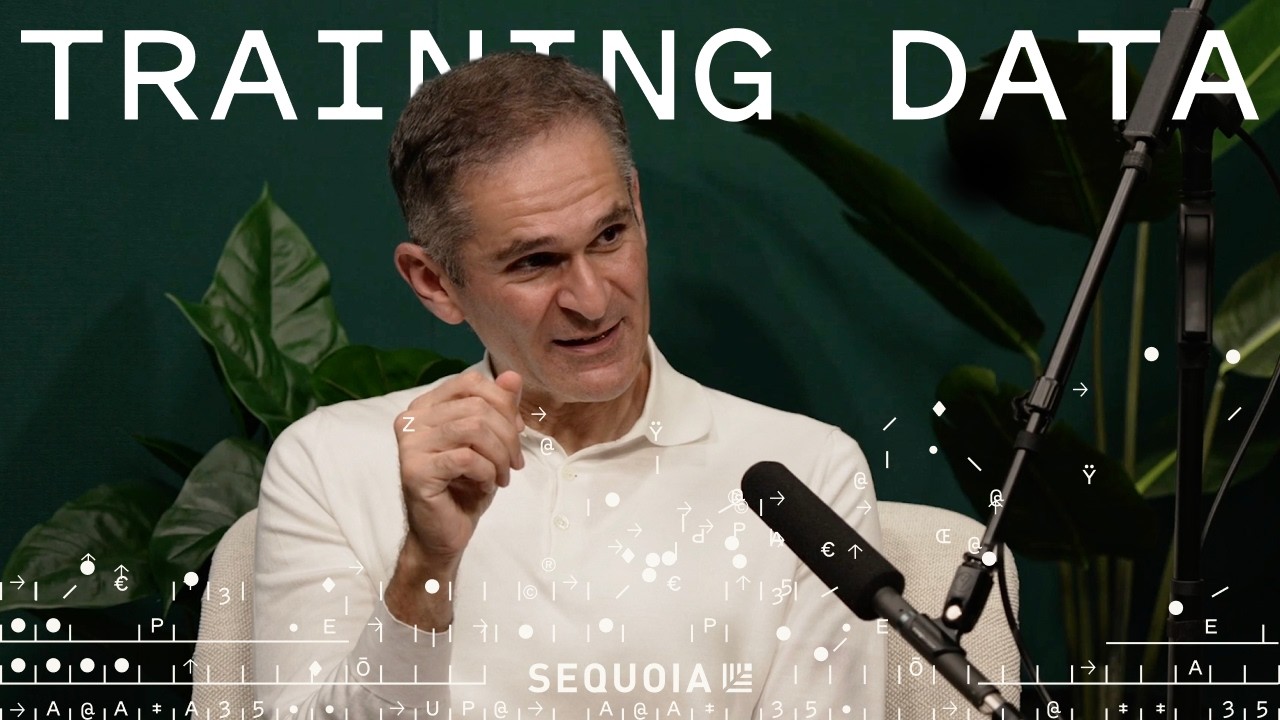
RAG Is A Hack - with Jerry Liu from LlamaIndex
About this episode
From the show’s notesWant to help define the AI Engineer stack? >800 folks have weighed in on the top tools, communities and builders for the first State of AI Engineering survey, which we will present for the first time at next week’s AI Engineer Summit. Join us online! This post had robust discussion on HN and Twitter. In October 2022, Robust Intelligence hosted an internal hackathon to play around with LLMs which led to the creation of two of the most important AI Engineering tools: LangChain 🦜⛓️ (our interview with Harrison here) and LlamaIndex 🦙 by Jerry Liu, which we’ll cover today. In less than a year, LlamaIndex has crossed 600,000 monthly downloads, raised $8.5M from Greylock, has a fast growing open source community that contributes to LlamaHub, and it doesn’t seem to be slowing down. LlamaIndex’s Origin (aka GPT Tree Index) Jerry struggled to make large amounts of data work with GPT-3 (which had a 4,096 tokens context window). Today LlamaIndex is at the forefront of the RAG wave (Retrieval Augmented Generation), but in the beginning Jerry wasn’t focused on embeddings and search, but rather on understanding how models could summarize, link, and reason about data. On November 5th, Jerry pushed the first version to Github under the name “GPT Tree Index”: The GPT Tree Index first takes in a large dataset of unprocessed text data as input. It then builds up a tree-index in a bottom-up fashion; each parent node is able to summarize the children nodes using a general summarization prompt; each intermediate node containing summary text summarizing the components below. Once the index is built, it can be saved to disk and loaded for future use. Then, say the user wants to use GPT-3 to answer a question. Using a query prompt template, GPT-3 will be able to recursively perform tree traversal in a top-down fashion in order to answer a question. For example, in the very beginning GPT-3 is tasked with selecting between *n* top-level nodes which best answers a provided query, by outputting a number as a multiple-choice problem. The GPT Tree Index then uses the number to select the corresponding node, and the process repeats recursively among the children nodes until a leaf node is reached. […] How is this better than an embeddings-based approach / other state-of-the-art QA and retrieval methods? The intent is not to compete against existing methods. A simpler embedding-based technique could be to just encode each chunk as an embedding and do a simple question-document embedding look-up to retrieve the result. This project is a simple exercise to test how GPT can organize and lookup information. The project attracted a lot of attention early on (the announcement tweet has ~330 likes), but it wasn’t until ~February 2023 that the open source community really started to explode, which was around the same time that LlamaHub was released. LlamaHub made it easy for developers to import data from Google Drive, Discord, Slack, databases, and more into their LlamaIndex projects. What is LlamaIndex? As we mentioned, LlamaIndex is leading the charge in the development of the RAG stack. RAG boils down to two parts: * Indexing (i.e. how do you load and index the data in your knowledge base) * Querying (i.e. how do you surface the data and fit it in the model context) Indexing To get your data from all your sources to your RAG knowledge base, you can leverage a few tools: * Documents / Nodes: A Document is a generic container around any data source - for instance, a PDF, an API output, or retrieved data from a database. A Node is the atomic unit of data in LlamaIndex and represents a “chunk” of a source Document (i.e. one Document has many Node) as well as its relationship to other Node objects. * Data Connectors: A data connector ingest data from different sources and turn them into Document representations (text and simple metadata). These connectors are offered through LlamaHub, and there are over 200 of them today. * Data Indexes: Once you’ve ingested your data, LlamaIndex will help you index the data into a format that’s easy to retrieve. There are many types of indexes (Summary, Tree, Vector, etc). Under the hood, LlamaIndex parses the raw documents into intermediate representations, calculates vector embeddings, and infers metadata. The most commonly used index is the VectorStoreIndex, which can then be paired with any of the vector stores out there (an example with Chroma). Querying The RAG pipeline, during the querying phase, sources the most pertinent context from a user's prompt, forwarding it along to the LLM. This equips the LLM with current / private knowledge beyond its foundational training data. LlamaIndex offers adaptable modules tailored for building RAG pathways for Q&A, chatbots, or agent use, since each of them has different requirements. For example, a chatbot should expect the user to interject with follow up questions, while an agent will try to carry out a whole task on its own without user intervention. Building Blocks * Retrievers: A retriever defines how to efficiently retrieve relevant context from a knowledge base (i.e. index) when given a query. Vector index is the most popular mode, but there are other options like Summary, Tree, Keyword Table, Knowledge Graph, and Document Summary. * Node Postprocessors: Once the retriever gets you Node objects back, you will need to do additional work like discarding low similarity ones. There are many options here as well, such as `SimilarityPostprocessor` (i.e. drop nodes below a certain similarity score) or `LongContextReorder` which helps avoid the issues raised in the “Lost in the Middle, U-shaped recollection curve” paper. * Response Synthesizers: Takes a user query and your retrieved chunks, and prompts and LLM with them. There are a few response modes here that balance thoroughness and compactness. Pipelines * Query Engines: A query engine is an end-to-end pipeline that allow you to ask question over your data. It takes in a natural language query, and returns a response, along with reference context retrieved and passed to the LLM. This makes it possible to do things like “Ask panda questions” by leveraging Panda dataframes as a data source. * Chat Engines: A chat engine is an end-to-end pipeline for having a conversation with your data (multiple back-and-forth instead of a single question & answer). This supports traditional OpenAI-style chat interfaces, as well as more advanced ones like ReAct. * Agents: An agent is an automated decision maker (powered by an LLM) that interacts with the world via a set of tools. Agent may be used in the same fashion as query engines or chat engines, but they have the power to both read and write data. For reasoning, you can use either OpenAI Functions or ReAct. Both can leverage the tools offered through LlamaHub for further analysis. RAG vs Finetuning Now that you have a full overview of what LlamaIndex does, the next question is “When should I use this and when should I fine tune?”. Jerry’s TLDR is that “RAG is just a hack”, but a powerful one. Each option has pros and cons: * Lower investment: RAG requires almost 0 upfront investment, unlike finetuning which requires data cleaning, model training, increased costs for finetuned inference, etc. * Stricter access control and higher visibility: when finetuning, the model learns everything. With RAG, you can decide what documents the index should have access to, making it more secure by default. You are also able to see everything that was passed into the context if a response doesn’t look right. * Context window limitation: you can only fit so many tokens into the prompt due to the way models work. Finetuning helps you circumvent that by compressing the knowledge into the model weights rather than putting it in the prompt. As Jerry says, the best way to know this inside out is to learn to build RAG from scratch (without LlamaIndex) - and they have plenty of tutorials on his Twitter and blog to learn this. The other issue is that the math for finetuning isn’t well known yet as we discussed with Quentin Anthony from Eleuther, so unless you have money and time to invest into exploring fine tuning, you’re better off starting with RAG. Full YouTube Discussion! Show Notes * LlamaIndex * LlamaHub * SEC Insights * Robust Intelligence * Quora’s Poe * Chroma * Vespa * Why should every AI engineer learn to build RAG from scratch? * LangChain * Gorilla * Lost in the Middle: How Language Models Use Long Contexts Timestamps * [00:00:00] Introductions and Jerry’s background * [00:04:30] Starting LlamaIndex as a side project * [00:05:11] Evolution from tree-index to current LlamaIndex and LlamaHub architecture * [00:11:39] Deciding to leave Robust to start the LlamaIndex company and raising funding * [00:20:06] Context window size and information capacity for LLMs * [00:21:34] Minimum viable context and maximum context for RAG * [00:22:52] Fine-tuning vs RAG - current limitations and future potential * [00:24:02] RAG as a hack but good hack for now * [00:26:19] RAG benefits - transparency and access control * [00:27:46] Potential for fine-tuning to take over some RAG capabilities * [00:30:04] Baking everything into an end-to-end trained LLM * [00:33:24] Similarities between iterating on ML models and LLM apps * [00:34:47] Modularity and customization options in LlamaIndex: data loading, retrieval, synthesis, reasoning * [00:40:16] Evaluating and optimizing each component of Lama Index system * [00:46:02] Building retrieval benchmarks to evaluate RAG * [00:47:24] SEC Insights - open source full stack LLM app using LlamaIndex * [00:49:48] Enterprise platform to complement LlamaIndex open source * [00:51:00] Community contributions for LlamaHub data loaders * [00:53:21] LLM engine usage - majority OpenAI but options expanding * [00:56:25] Vector store landscape * [00:59:46] Exploring relationships and graphs within dat