🔬 Google's AI Scientist Started as an Attempt to Automate Kaggle — John Platt, Google Fellow

About this episode
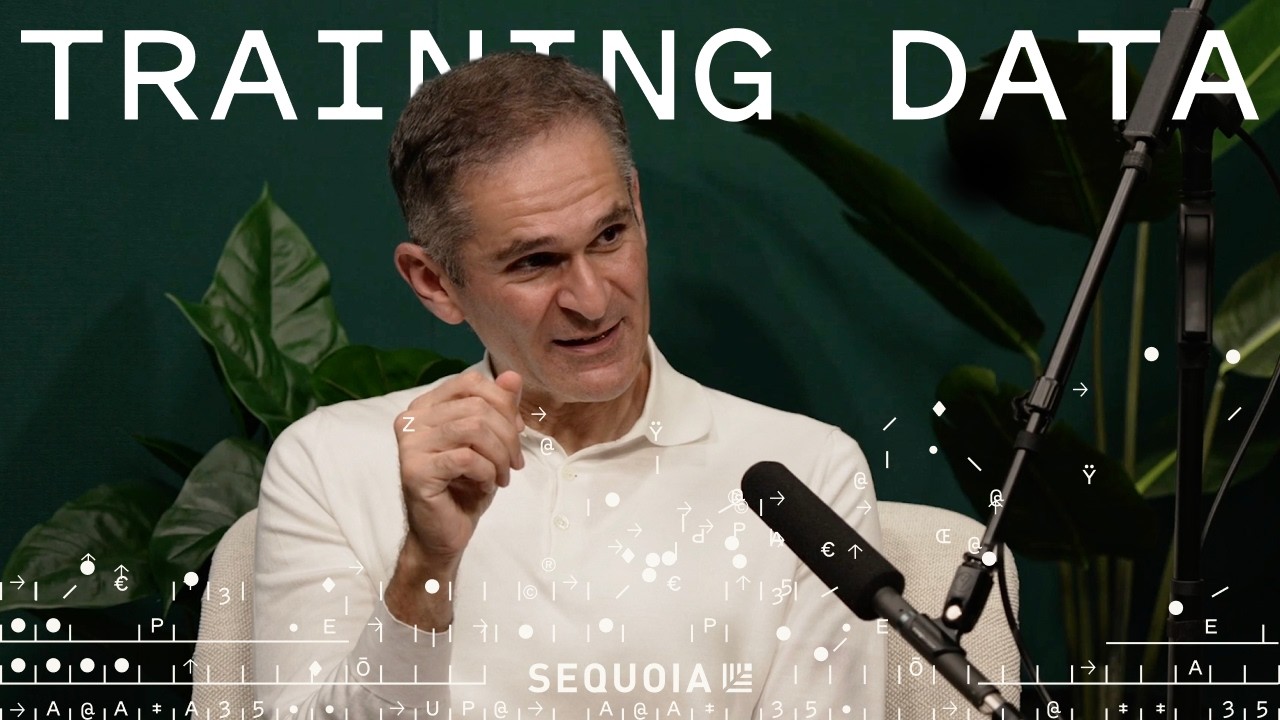
From the show’s notesFrom inventing textbook machine learning algorithms to winning an Academy Award and discovering two asteroids, John Platt has spent his career at the intersection of computation and science. In this episode, the Google Fellow joins Latent Space to unpack how AI can accelerate scientific discovery, what it takes to turn a research problem into something an agent can optimize, and why better models still need scientists who know how to avoid fooling themselves.
We go deep on Google’s Empirical Research Assistance (ERA): an AI research system that grew out of an attempt to automate Kaggle, combines LLMs with tree search to improve experiments, and helped crack a climate modeling problem that had stalled for years. John explains the leap from Gemini 2.0 to 2.5, the dangers of reward hacking, and how AI can help reduce airplane contrail warming and detect wildfires. We also explore fusion, quantum computing, the early days of neural networks, studying under Richard Feynman, and why developing scientific taste still means doing some things the hard way.
Read the show’s notes in full
We discuss: - John’s Academy Award, two asteroid discoveries, and the legacy of Platt scaling and SMO - ERA: how an “auto-Kaggle” idea became a system for scientific research - Turning scientific problems into scoreable tasks—and why choosing the score is the hard part - How LLMs, tree search, and Upper Confidence Bound guide experimental iteration - The Gemini 2.0-to-2.5 inflection that made the approach work - Why predictive accuracy doesn’t automatically mean scientific understanding - Reward hacking, Goodhart’s law, and the half-pixel labeling error that helped win a Kaggle competition - Why John still recommends starting with linear regression or an SVM - How airplane contrails trap heat, and why small changes in flight altitude can help - Measuring avoided warming—and how ERA helped solve a problem that had resisted years of work - Why climate modeling is fundamentally different from weather forecasting - FireSat and detecting wildfires before they grow out of control - John’s optimism about fusion, the Lawson criterion, and the challenges every approach faces - Superconducting qubits, quantum echoes, and what comes after the NISQ era - The helium shortage and a startup’s proposal to turn mercury into gold inside a fusion reactor - The early neural network community, Hopfield networks, and NeurIPS’ roots at Snowbird - Discovering asteroids with film and a stereoscope—and naming one after his mother - Learning from Feynman and working as Carver Mead’s sysadmin - Why domain expertise, hands-on experimentation, and scientific taste matter in the age of AI - John’s 20% time rule for learning, and what gets lost when everything is optimized - The future of human scientists—and Feynman’s enduring advice about not fooling yourself